Faith Works 7-13-19
Jeff Gill
Strangers, sojourners, spacemen
___
Last December this fifty-something space geek managed to work into the Christmas Eve service a reference to the Apollo 8 circumnavigation of the Moon, and the reading by the astronauts of passages from Genesis 1, the creation narrative, on that same evening fifty years before.
Now we're coming up on the next step half a century ago in our journey up from the Earth, out into space: the lunar landing achieved by the Apollo 11 astronauts.
Neil Armstrong, no longer with us, set foot on the Moon's surface with the words "One small step for a man," but he went on to make a point about the greater humanity that made his step possible.
Michael Collins, up as all alone as any human being had ever been in all of history, kept the home fires burning in the Command Module, "Columbia" as the "Eagle" lunar lander rested on the Moon. His "Carrying the Fire" is still perhaps the best book written by any of the American astronauts, a worthy counterpart to Thomas Wolfe's "The Right Stuff" from journalism's point of view.
And the indispensible and irrepressible Buzz Aldrin was the second man down the "Eagle" lander ladder, but he did have an interesting first for himself. The first meal, the very first eating and drinking done by humanity on another planet, was Buzz quietly and privately, but with Mission Control's permission "off microphone" opening up a small packet of bread and wine blessed by his Presbyterian pastor back in Texas. Communion was the first meal on the Moon.
All of the astronauts did the same thing at some point, from Armstrong to Aldrin to Collins, Lovell and Borman already a few months before on Apollo 8, and Lovell again famously (seen in the person of Tom Hanks) on Apollo 13 perilously relying on their Lunar Module as a lifeboat to preserve a crippled spacecraft around the back of the Moon, looking out their windows or visors back into space, at the Earth.
Right on down to Harrison Schmitt some three and a half years later on the last moon walk, almost every Apollo astronaut commented on the experience of looking back at the "big blue marble" in the sky, and realizing that every hope, every dream, every person they loved was on that dot they could cover with an outstretched finger . . . and they could see no borders, no human lines or distinctions, but the simple essentially fragile reality of all of life as they knew it wrapped around that one terribly special place.
Coming up to the Apollo 11 anniversary, which will and must be celebrated by all of us, whatever faith, whatever spiritual orientation you carry, whichever country you call your own, we all on this planet have again a chance to reflect on the point and purpose of life. Are we here as a cosmic infestation, a mistake of chemistry and biology, or is life and particularly human life here for a reason?
That question is the muscle and bone underneath the skin of any religious tradition worth considering. Why are we were, where are we from, and where are we going – and thinking about that from a completely different heavenly body really does put a great deal of such reflection into a kind of sharp contrast, as distinct as the space walkers said the shadows on the Moon appeared to their eyes.
And yes, how we handle the lines we have drawn on our maps, and the barriers to movement we establish as countries and ethnicities: how do they look from a heavenly perspective? What does fifty years of awareness of our necessary community on a single planet with oxygen and water and life tell us about how we should love one another?
I think we all, whatever our church home or religious inclination, can put some thought and even prayer into those questions as we celebrate what American ingenuity achieved on July 20, 1969.
Jeff Gill is a writer, storyteller, and pastor in Licking County; he was not quite eight when he watched Walter Cronkite explain the blurry pictures on a black and white TV. Tell him how you remember that night, if you do, at knapsack77@gmail.com, or follow @Knapsack on Twitter.
+ + +
Faith Works 7-20-19
Jeff Gill
Beyond the Moon
___
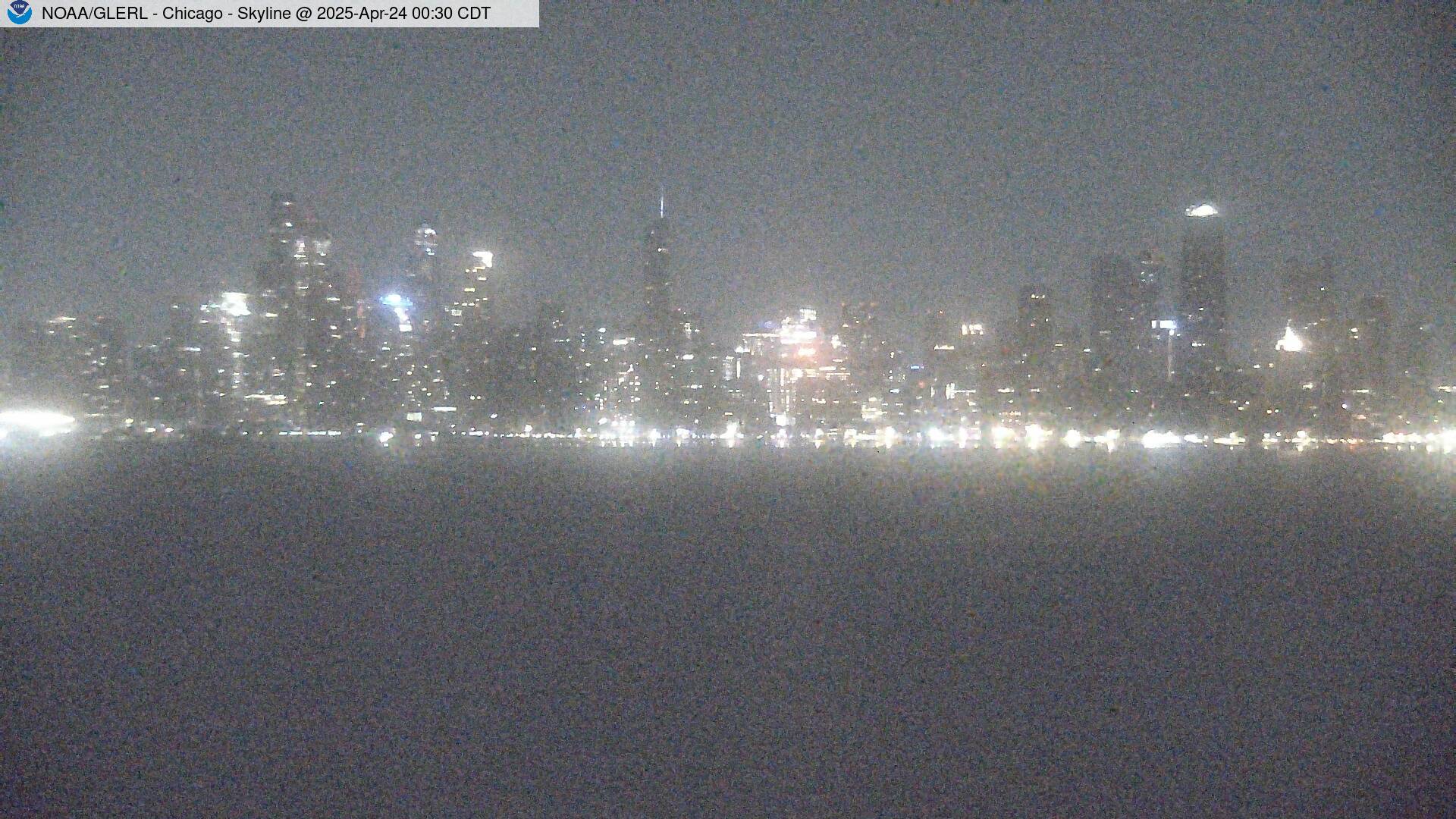
This night, fifty years ago, I was on my great-aunts’ porch
in Chicago.
They had an enclosed area, surrounded by windows, a former
porch that was more of a cold room in winter and a very hot one mostly in the
summer, except long after the sun went down and especially when the wind was in
the east, and blew in off of Lake Michigan, just a block and a half away.
As little kids we were not quite understanding what was
going on, but picking up from the adults how important it really was. I was
seven, nearly eight, and besotted by America’s space program, so I might have
had a little more direct investment in it, but I’ll admit the small black and
white TV with a loop and rabbit ears on the back, blurry even without switching
to the lunar images, kept the majesty at arm’s length. I kept watching, though,
because my beloved great-aunts, a pair of never married schoolteachers back
when that was a thing, were riveted to the story, and so was I.
We switched back and forth from Walter Cronkite to Frank
Reynolds, and honestly I’m not sure which we were on when Neil Armstrong
finally came out and made his cautious journey down the last steps into
history.
What I do recall that Sunday night was leaning out a window
and looking at the Moon overhead, and thinking “there are people up there.” It
made the lunar surface closer, somehow.
In the last thirty years, I’ve done many tours of the Newark
Earthworks, and had more than my share of opportunities to simply enjoy and reflect
for myself on the grounds, the lines the earthen walls inscribe towards the
horizon, and the arcs of Moon and Sun from their rising to their setting.
Somehow, two thousand years ago, Native Americans living here were able to
record and project and plan those movements so that they could encode into
their walls and alignments the movements of the heavenly bodies.
And I’ve wondered often: did they wonder, those Native
American scientists and leaders and everyday people, if other humans could ever
stand on the surface of that circle? Did they envision it as a sphere; how
clearly did they project its orbits?
The comparison of the only other octagon and circle
connected earthwork in all of North America, just sixty miles southwest of us
in Chillicothe, offer a tantalizing hint that, in their adjustment of the
geometry of the octagonal figure, they understood enough about latitude that
they may well have known they stood on a sphere. Two thousand years ago, not
far off of when Egyptian and Greek scholars first calculated the same reality
from solar geometry across a comparable stretch of landscape.
And if the Earth was a sphere, it wasn’t that big a leap to
infer that the disk of the Moon was in fact the face of a sphere in the skies.
They might well have known that here in Newark back then: but to somehow travel
across the heavens, and stand on it and look back at us?
Yet it’s still hard even for me, a youthful space program
fanatic, to imagine that we did it, and the living memories of those who did are
passing us by. It’s amazing, incredible, and perhaps will again become
unbelievable.
So too is the nearly unbelievable idea that somehow after we
die our memories, our essential selves, our souls have a place to go. Some
religious teachers railed against the lunar landings, feeling that the
establishment of footprints in the sky like that would undermine our belief in
a heaven.
It does tend to change our sense of direction, somewhat.
Heaven after Apollo 11 is less simply “up there” than it is . . . well, Jesus
did say that the Kingdom of Heaven, the Realm of God itself is within you. Not
“out there,” not “beyond space,” not “a long time ago in a galaxy far, far
away.” Within you.
God’s promises are both infinitely within, and immeasurably
beyond our human understanding. Earthly achievements may help us put them in
perspective, like the view of Earth from the Moon does, but they can’t overshadow
ideas that shine in the immense darkness, like “love one another.” That’s true
for anyone looking up at the Moon, wondering how it looks to another in a
different place, or even a different time.
Jeff Gill is a writer, storyteller, and pastor in Licking
County; he still likes to go out and look at the Moon from time to time, and
imagine walking on its surface. Tell him how you think of the Moon at knapsack77@gmail.com, or follow @Knapsack
on Twitter.